Tradition says it’s named after a womanHodiedah’s history and beauty [Archives:2003/624/Last Page]
ISMAIL AL-GHABIRI
The history of Hodiedah is rich and old as one can imagine. Al Muktataf in Yemen's History, written by the Yemeni historian Abdullah Abdulkareem Al Gurafi, says that there was a lady named Hodiedah in the year 700 of Hijrah, owning a place for rest frequently visited by foreigners and travelers and from whom the name of the city originated.
Another book written by Judge Ahmed Othman Mutair says that Hodiedah was first a small village and it came to be known as a governorate only in the year 946 of Hijrah, and it gained it fame from the strategic location it occupies on the Red Sea. The location made it the target of Portuguese, Italians and Britons during the colonization period.
John Poldery mentioned that Hodiedah was established during the Rasoulieen period at the end of the second Hijrah century, that is 797 AD Poldery added that Jazan and had been once the most famous port for exporting coffee, but afterwards Hodiedah and Luhaiya became the most important coffee exporting harbors.
The flourishing of Hodiedah began when the Dutch established commercial zones in Shiher, Mukha and Hodiedah in 1689 AD.
Turning attention to historical sites in Hodiedah, one can admire a number of castle forts, old towns like, Al Shareef castle, Bait Al Fakeeh castle, Zabeed castle and Hayss castle.
The most attractive on the above is Zabeed town with its famous four gates; Al Shabareeq Gate in the east, Siham gate in the north, Al Nakheel gate in the west and Al Kartab gate in the south which are still standing recounting the great history of Yemenis who lived in that area.
The town of Zabeed was a very famous educational place where a number of very old schools are scattered here and there.
Many of the above mentioned sites are subjected these days to rehabilitation process to keep there unique features. Zabeed had been the capital of three states, Bani Zeyad in 204 after Hijra, Bani Najah in 412 after Hijrah and Babi Rasool in 625 after Hijrah.
We can say that most of the towns in Hodiedah have a rich history and tourist places are at every single town.
In Hodiedah you get natural protected areas and mineral baths used to treatment of a number of diseases like Al Sokhna bath.
Once you make up your mind and decide to visit Hodiedah you would enjoy visiting the popular markets to be held on weekly basis and people from across Hodiedah to joint such traditions followed for hundreds of years. For tourists, locals as well as foreigners, the pottery industry is the most eye-catching places to visit. Like other Yemeni towns and cities, Hodiedah has it own popular, social and cultural diversity where modern civilization is mixed with great history of the past.
You can find the golden coasts, and resorts as in Khawkha which is considered the bets resort in Yemen.
The people of Hodiedah can be classified into three categories, those working in the field of agriculture, cattle, and fishing.
A special dressing is common in Hodiedah during certain religious and national feasts.
Wedding ceremonies are of different way in Hodiedah than in other Yemeni cities.
Poetry nights are being held from time. There is Shami poetry, Yamana poetry, and Humaini, which is the most popular category of poetry.
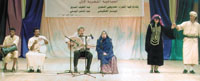
People of Hodiedah sing Al waidan, Al Tatweyah, Al Hazfah, Al Zawamel and others. Singing is usually accompanied by folkloric dancing such as, Al Zar dance, Al Saheli, Al Muhangal and al Shargi.
These are some of the traditions and ways of life characterized the city of Hodiedah, which we think deserve to visited and admired.
——
[archive-e:624-v:13-y:2003-d:2003-02-24-p:lastpage]